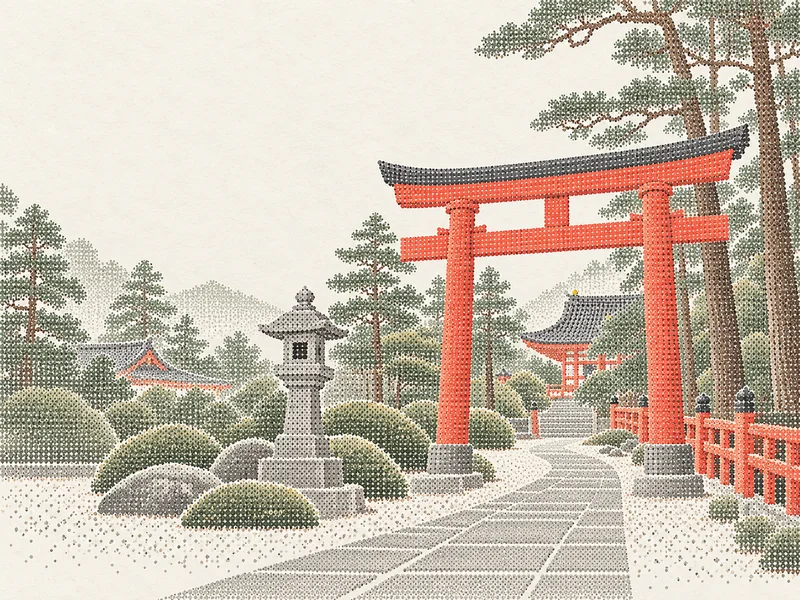
Discover a Place to Visit
Search across all 47 prefectures. Save favourites and get directions in Apple Maps.
 GoShuin
AE STUDIO / GOSHUIN JOURNAL
Every stamp, a memory.
GOSHUIN MAP & JOURNAL FOR IPHONE
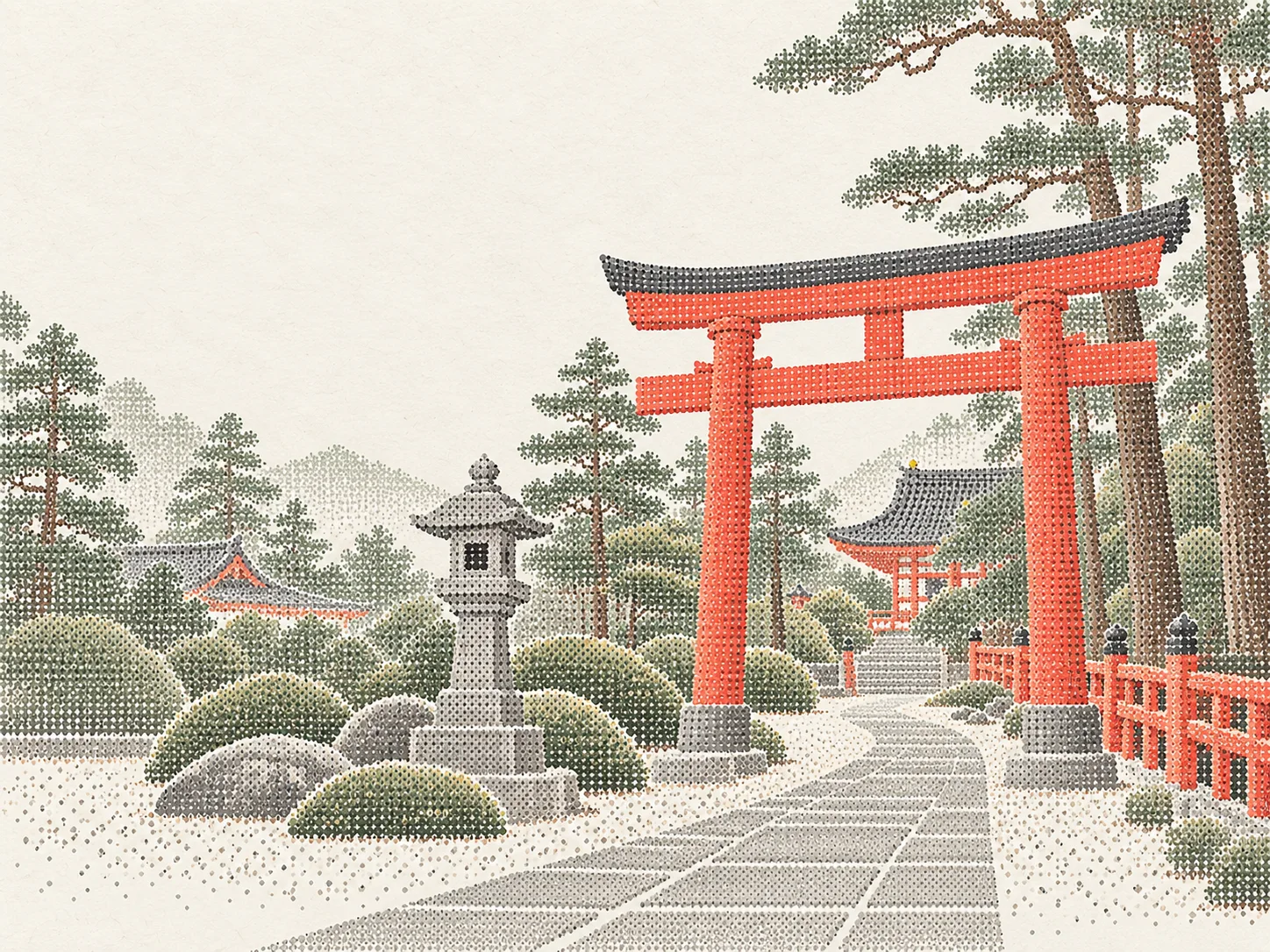
DISCOVER · REMEMBER · COLLECT
INSIDE GOSHUIN
Search across all 47 prefectures. Save favourites and get directions in Apple Maps.
Keep each visit’s date, notes, goshuin status and optional offering amount.
Scan a page, check the suggested temple or shrine, and save the link.
Why we built GoShuin
GoShuin keeps your goshuin connected to the places and moments behind them.
The calligraphy is beautiful. The visit gives it meaning. Keep both, with a date and a note of your own.
Read a place’s history, follow its sources and check the venue’s current guidance.
Make time for worship. Respect photography rules and the people caring for the place.
Keep the date, a personal note and a photo of your goshuin together after your visit.
GoShuin is an independent app by AE Studio. It keeps photos and memories; receive goshuin at temples and shrines, and keep your physical goshuincho.
Learn about the tradition with JNTO ↗HISTORY · CULTURE · CONNECTION
Learn a little about the place before you visit.
Shinto shrines and Buddhist temples follow different traditions. Look for a shrine’s torii or a temple’s roofed sanmon gate.
Red seals and brushwork record a visit. Keep the original in your goshuincho and a photo in GoShuin.
Make time for worship before requesting a goshuin. Follow each place’s guidance on photography and reception. At Buddhist temples, join your hands quietly rather than clapping.
Explore the traditions with JNTO: Shrines & temples ↗Goshuin & goshuincho ↗
A CLOSER LOOK · MEIJI JINGU
Founded in 1920, Meiji Jingu honours Emperor Meiji and Empress Shoken in a forest in central Tokyo.
Read its history in GoShuin, then add your own visit.
Read Meiji Jingu’s own history ↗SCAN · CONFIRM · SAVE
Recognition finds a possible match. You decide where your goshuin belongs.
Photograph or import a goshuin. Adjust its crop and perspective.
Check the on-device recognition suggestion, or choose a temple or shrine yourself.
Save your scan. Open the linked place again, or change the link later.
No reliable match? Choose a place manually, or save the scan on its own.
JAPAN, IN CONTEXT
Explore national temple and shrine counts, with original sources.
GoShuin’s mapped places and national organisation counts are different measures. Listings do not confirm opening or goshuin availability.
Change in national temple and shrine organisation counts, using 2019 as the starting point.
−517organisations
−0.67%Change since 2019
National total 76,390
−364organisations
−0.45%Change since 2019
National total 80,570
2024 · Temples −517 / Shrines −364
A decrease in organisation counts is not a count of buildings closed or demolished. These figures include organisations without corporate status. Verified closure and disappearance totals are not currently available here.
| Reference year | Temples | Shrines | Temple change | Shrine change | Source |
|---|---|---|---|---|---|
| 2019 | 76,907 | 80,934 | — | — | Yearbook PDF 2019 ↗ |
| 2020 | 76,815 | 80,884 | −92 | −50 | Yearbook PDF 2020 ↗ |
| 2021 | 76,699 | 80,847 | −116 | −37 | Yearbook PDF 2021 ↗ |
| 2022 | 76,634 | 80,709 | −65 | −138 | Yearbook PDF 2022 ↗ |
| 2023 | 76,551 | 80,653 | −83 | −56 | Yearbook PDF 2023 ↗ |
| 2024 | 76,390 | 80,570 | −161 | −83 | Yearbook PDF 2024 ↗ |
Data updates are scheduled for 1 April and 1 October. National statistics are annual; publication and reference years differ.
Synced with published data · Sources checked
Agency for Cultural Affairs: Religious Yearbooks ↗National statistics compiled and adapted by AE Studio from Table 2 of the Agency for Cultural Affairs Religious Yearbooks. See the MEXT Website Terms of Use (17 August 2026) for reuse.
Mapping: Wikidata / OpenStreetMap: CC0 / ODbLA LITTLE HELP
GoShuin is a goshuin map and journal for iPhone by AE Studio. Find temples and shrines, record visits, and save goshuin photos with dates and notes. Basic browsing and local records need no account.
Yes—English, Japanese, Simplified Chinese and Traditional Chinese. Some place names, sources and photographed goshuin remain in Japanese.
No. GoShuin saves photos and visit records. Receive goshuin at temples and shrines, follow their reception rules, and keep your physical goshuincho.
Photograph or import a page, adjust the crop, and add a title, date and note. Recognition runs on your device. Confirm the suggested place, choose one manually, or save without a link. You can change the link later without deleting the scan.
The three starter illustrations need no account or purchase. Other available illustrations can be revealed with a scan linked to their exact place or an optional one-time pack. Marking a place as visited does not reveal its artwork. Additional artwork downloads require an internet connection and Sign in with Apple. Only if you confirm a free unlock, a small stamp thumbnail is sent to our server and Gemini to check the match. Original images are not sent, and the delivery server does not save image bytes.
All Japan is US$19.99 in the US storefront; available prefecture packs are US$2.99 each. Current regions are Toyama, Nagano, Kyoto, Hyogo and Hiroshima. Apple displays your local price before purchase. These are one-time purchases; no new subscription is offered. To restore, use the same Apple Account and choose Restore Purchases in Settings. For refunds, use Apple’s purchase support.
Visits, notes, favourites and offering amounts stay on your device. Stamp text recognition also runs on device. Sign in with Apple to enable optional private iCloud sync for your scan library. Offering amounts are personal notes; the app does not transfer money. See the privacy policy for details.
Open Settings → Account, start deletion and reauthenticate with the relevant Apple account. Deletion clears your private cloud library, revokes Apple sign-in, and removes server-held account, device, download and submission history. Public place information and minimal anti-replay records remain. If deletion fails, your account is retained so you can check your connection and retry.
Check the venue’s official opening hours, prices and goshuin availability. Follow its worship and photography rules. Coverage is partial; place data uses Wikidata (CC0) and OpenStreetMap contributors (ODbL).
A goshuin is a seal with calligraphy received at many Japanese shrines and temples as a record of a visit for worship. A goshuincho is the book used to keep these pages. Practices vary by place. GoShuin organises photos of the stamps you receive; it does not issue religious seals. See the Japan National Tourism Organization’s goshuin guide for context.